How Parking Gate Barrier Integrates RFID Access Control
 FACEBOOK
 TWITTER
 LINKEDIN
Parking Gate Barrier solutions are changing how busy car parks, commercial centers, and toll stations move vehicles in and out every day. At CAIMEN, we speak with operators who are frustrated by long queues, confused drivers, and barriers that fail at the worst possible moment. They are looking for a system that is smarter, faster, and safer. An RFID-enabled Parking Gate Barrier is designed exactly for that kind of environment.
Why Modern Facilities Need Smarter Parking Gate Barrier Systems
A few years ago, a barrier at the entrance was enough. It lifted, it dropped, and that was the end of the story. Today, traffic patterns are very different. Office employees arrive in waves, online shopping drives more courier vehicles, and weekend visitors expect a smooth parking experience. When the entrance is slow, the whole site feels inefficient.
Most sites tell us they face similar headaches:
✓Congestion at entry and exit lanes during peak periods
✓Difficulty keeping unauthorized vehicles out of private or paid zones
✓Heavy reliance on guards to check tickets or cards by hand
✓Rising wage costs and frequent mistakes during manual checks
✓Outdoor barriers suffering from rain, dust, heat, and direct sun
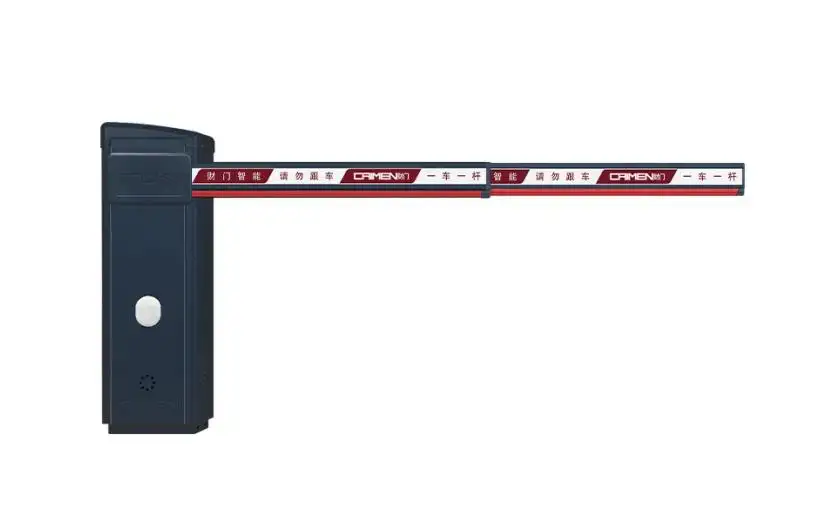
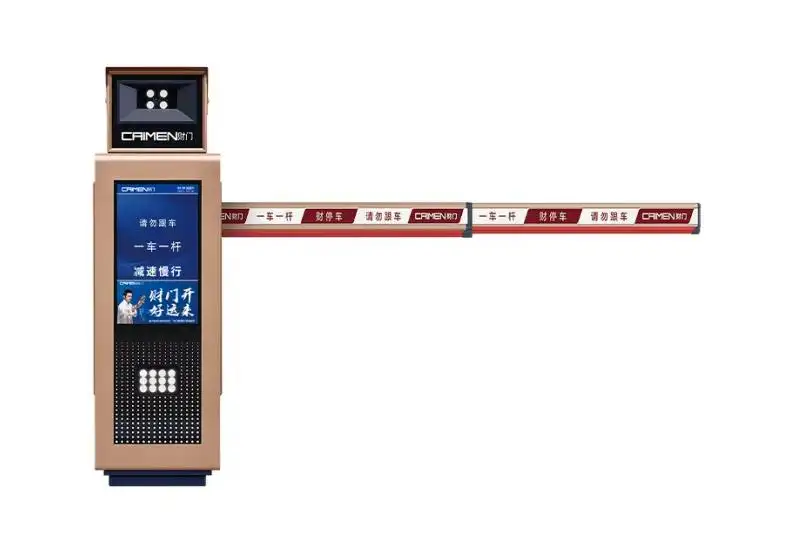
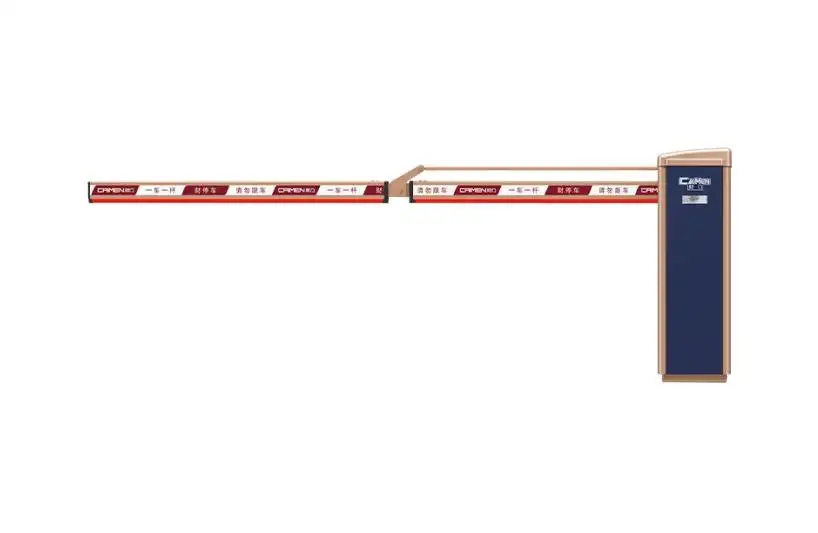
A modern Parking Gate Barrier must quietly absorb all of these pressures. That is why CAIMEN designs the boom arm and drive system for continuous, high-frequency use. The motor opens and closes the arm quickly and steadily, so vehicles spend less time waiting in front of the gate.
The cabinet itself is not just a box around the mechanism. Designed with a sealed housing, the unit effectively blocks dust and water, which is crucial for toll plazas and exposed car parks. Its treated surface improves resistance to rust and aging. In indoor settings, the minimalist, clean appearance ensures the Parking Gate Barrier integrates easily into offices, shopping malls, and hospitals without looking heavy or industrial.
However, even the best hardware cannot solve traffic jams alone. Real efficiency appears when the barrier becomes part of a connected access control system, especially one using RFID and license plate recognition.
How Parking Gate Barrier Integrates RFID Access Control
When a Parking Gate Barrier is linked with RFID access control, the entire flow at the lane changes. Drivers no longer fumble for paper tickets or stretch out of the window to scan a code. Identification happens in the background, in the time it takes to roll slowly toward the gate.
CAIMEN typically builds the Parking Gate Barrier system as an integrated package that links several key elements:
✓Entry and Exit RFID Readers
Mounted at each lane, the readers scan RFID tags or cards associated with drivers or vehicles. The scan is automatic and almost immediate, even through glass.
✓Central Controller Housed in the Cabinet
This controller interprets RFID signals, compares them with the access rules, and issues the open or close command to the barrier. At the same time, it logs events for records, billing, or later analysis.
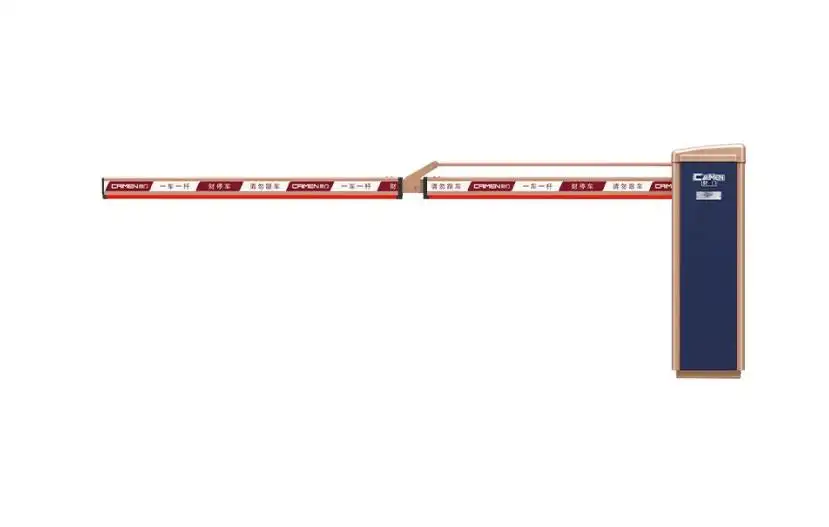
✓Strong Boom Arm and Refined Drive Unit
The boom arm is built to handle frequent cycles, sudden stops, and emergency reversals. The drive unit is tuned for smooth movement, so the Parking Gate Barrier does not shake or slam down.
✓Safety Detectors and Obstacle Sensors
Sensors around the barrier look for vehicles and pedestrians. If anything is detected under the arm while it is closing, the system reverses and raises the arm immediately to avoid impact.
✓Optional License Plate Recognition (LPR)
For sites that need extra checks, the Parking Gate Barrier can be paired with LPR cameras. The system compares the license plate with the database, which reduces the risk of people sharing RFID cards between multiple vehicles.
For night-time or low-light conditions, CAIMEN offers an LED light strip along the lower side of the straight arm. This turns the barrier into a visible line that drivers can see from a distance. It acts as both safety warning and design feature, giving the site a more modern, high-tech appearance.
From the driver's view, the whole process feels quite natural:
•The car approaches the lane at a slow, steady speed.
•The RFID tag is detected automatically.
•The system checks if access is allowed for that vehicle.
•The Parking Gate Barrier lifts smoothly.
•Sensors keep watching for anything under the arm.
•After the car passes, the arm lowers and the lane is ready for the next user.
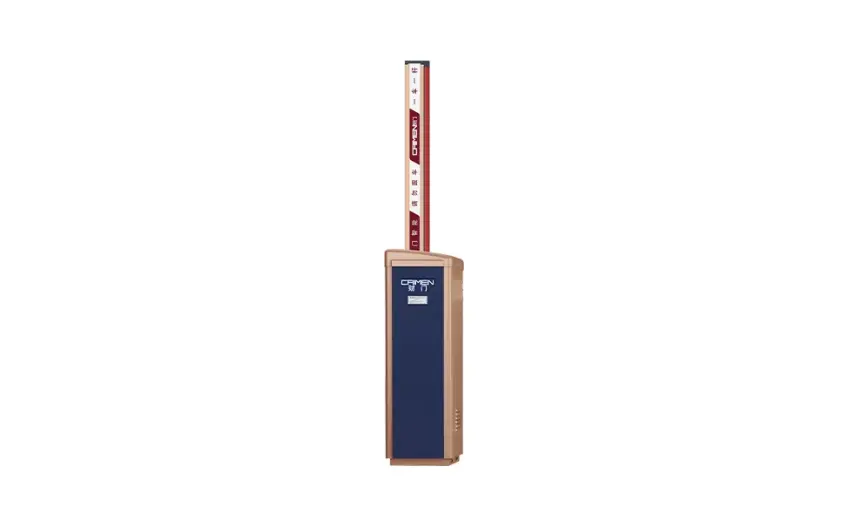
If a person, bicycle, or vehicle is underneath while the arm is moving down, the safety system responds at once and raises the barrier. There is no need for a guard to press an emergency button. For the operator, this reduces accidents, repair work, and conflict with drivers. The Parking Gate Barrier quietly manages the risk in the background.
How CAIMEN Parking Gate Barrier Stays Reliable Year After Year
When you choose a Parking Gate Barrier, you are choosing how your facility will run for the next five, ten, or more years. The equipment influences maintenance schedules, staffing needs, and how drivers feel about your site.
CAIMEN focuses on the factors that matter most over this long life cycle. Reliability in high-volume conditions is at the top of the list. In many installations, lanes operate almost continuously, handling streams of vehicles from morning to night. The Parking Gate Barrier must keep opening and closing without overheating or slowing down. By combining a durable drive system with solid mechanical design, we help operators maintain stable performance and avoid traffic build-up.
Second, we design for tough outdoor conditions. Sun, rain, dust, and vehicle exhaust can all shorten the life of a poorly built barrier. Our sealed cabinet structure protects the electronics inside. Advanced coating and surface treatment slow down corrosion and fading, so the Parking Gate Barrier keeps working and looking professional even after years at the roadside.
Third, we treat safety as part of the core design, not an optional add-on. Obstacle detection is built into how the barrier works. When sensors notice a car or person under the arm, the system reacts instantly. This protects drivers, pedestrians, and the equipment itself, and it helps reduce unplanned downtime.
Fourth, we care about the experience at the lane. Clear LED warnings, simple status indicators, and a neat cabinet shape help drivers feel calm and guided rather than stressed. For property owners and brands, a smart, well-finished Parking Gate Barrier supports the image of a secure and well-managed site.
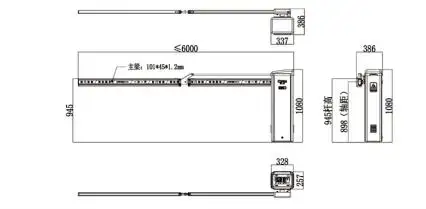
Finally, CAIMEN builds for easy integration with digital platforms. Our Parking Gate Barrier can connect with RFID access control, license plate recognition, parking management software, and even wider smart building or smart city systems. Operators can watch lane status in real time, check reports on peak hours, and fine-tune rules without standing at the gate.
When all these elements come together, the barrier becomes more than just a moving arm. It turns into a key tool in your access strategy. For the people running the site every day, the impact of a CAIMEN Parking Gate Barrier is very tangible:
✓Fewer manual checks and interventions at the gate
✓Reduced congestion and more stable traffic flow for users
✓Better monitoring of vehicle access times and usage patterns
✓Enhanced safety for vehicles, pedestrians, and staff at the lanes
If you are expanding your parking capacity, replacing aging barriers, or rolling out a smart industrial or campus project, CAIMEN can support you in choosing a Parking Gate Barrier configuration tailored to your lane design and security goals.
Ready to cut queues and raise security with one integrated solution?
Reach out to CAIMEN and discover how our Parking Gate Barrier and RFID access control can streamline vehicle flow and protect your property - lane by lane, day after day.